My PSA came back high. What happens next?
A high PSA is a reason to look more closely, not a diagnosis. What else can raise PSA, and how a repeat test, an MRI and a targeted biopsy fit together.

Jeannie Su, MD, MAS
Board-certified urologist. Fellowship-trained in robotic surgery and urologic cancer.
Book a visitWhat brings you in?
Choose what sounds most like you. You’ll see what it usually means and what Dr. Su would do next.
Most prostate cancer causes no symptoms, which is why the number matters. But an enlarged prostate, an infection and other everyday things can raise PSA too, and many men with a high reading do not have cancer.
She starts with the tests that can spare you a biopsy: a genomic blood or urine test such as 4Kscore, SelectMDx, ExoDx or IsoPSA, and a prostate MRI. If a biopsy is the right call, she uses MRI-ultrasound fusion to sample exactly the areas the MRI flagged.
The right choice depends on the stage of the cancer, how aggressive it looks under the microscope, and what matters most to you.
She lays out every option, not only surgery: active surveillance, focal therapy with HIFU or TULSA, radiation, hormone therapy and robotic prostatectomy. She works closely with medical and radiation oncologists, so you hear the whole picture. When surgery is right, she operates robotically and spares the nerves whenever the cancer allows.
That is often good news for your options. Kidney cancer rarely causes symptoms early, so a mass found this way has usually been caught in time to treat well. Some small masses turn out not to be cancer at all.
She reviews every image with you. Whenever possible she removes only the tumor and saves the rest of the kidney, usually robotically through a few small incisions. Most patients go home the next day and are back to most activities within one to two weeks.
Blood in the urine can look pink, red or dark brown, and it often comes and goes. It can come from an infection or a stone, but it is also the most common sign of bladder cancer, so it should never be waited out.
The work-up is two tests. A CT scan looks at your kidneys. A cystoscopy, a small camera passed into the bladder, looks at its lining. The cystoscopy takes a minute or two in the office, and most patients tolerate it well.
An enlarged prostate (BPH) is common as men age and is not cancer. Because the same symptoms can have other causes, it is worth a proper evaluation.
Treatment ranges from watchful waiting to medication to a procedure. She offers UroLift, Rezūm, GreenLight laser, TURP, robotic simple prostatectomy and Aquablation, a heat-free robotic waterjet that works on prostates of any size, and she explains how each one affects sexual function before you choose.
Many small stones pass on their own. Dr. Su has performed thousands of kidney stone surgeries for the ones that don’t. If you have a stone and a fever, go to the emergency room.
She reviews your scans with you and matches the treatment to the stone: ureteroscopy for smaller stones and stones in the ureter, shockwave lithotripsy for kidney stones under 1.5 cm, and percutaneous surgery (PCNL) for stones over 2 cm.
Erectile dysfunction and low testosterone have many causes, and most of them can be treated. Trouble with erections can also be an early sign of heart disease or diabetes, which is one more reason to get checked.
She evaluates and treats erectile dysfunction and low testosterone, and performs no-scalpel vasectomy in the office. Most men heal from a vasectomy in under a week, and many are back at a desk job the next day.
Leaking with a cough, a laugh or exercise is stress incontinence. A sudden urge that is hard to hold is overactive bladder. Dr. Su treats both, in women and in men.
Options include bladder Botox, InterStim nerve stimulation, slings and Bulkamid. She does not fit pessaries or perform prolapse surgery, and can refer you if you need them.
Each office can check whether your plan is in network before you come in.
A list of your medications, your PSA or urine results, and any imaging or pathology reports. If your scans are on a disc, bring the disc.
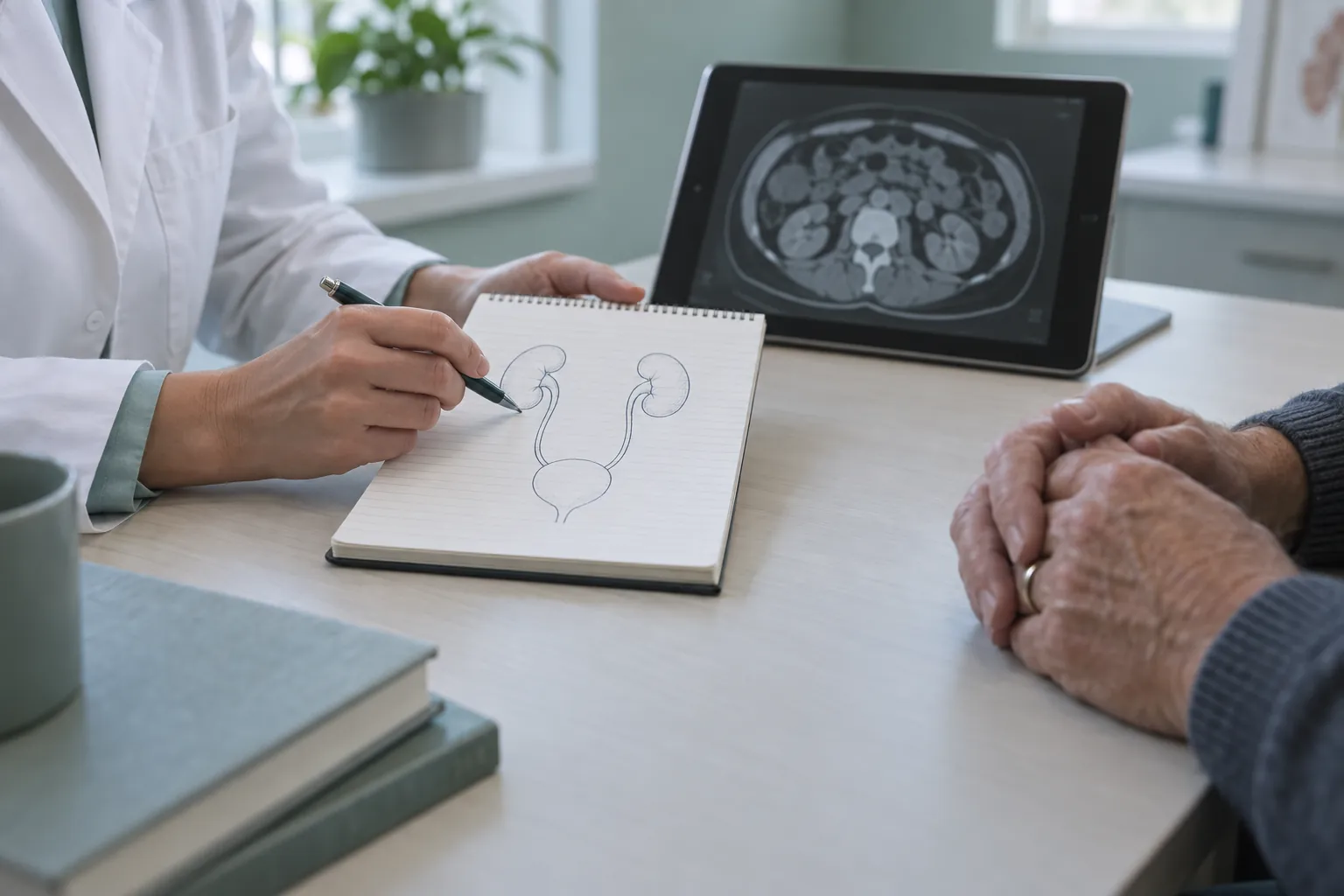
Dr. Su pulls up your images, sketches what she sees if that helps, and explains it in plain language.
You’ll hear every reasonable option, including the ones that don’t involve surgery, and what she would recommend for you.
What Dr. Su treats
Prostate, kidney, bladder and testicular cancer, from the first abnormal test through surgery and follow-up.
Enlarged prostate, weak stream, getting up at night, leaking and overactive bladder.
Kidney stones of every size, erectile dysfunction, low testosterone and no-scalpel vasectomy.
Dr. Su is a fellowship-trained urologic oncologist and robotic surgeon. Her focus is prostate, kidney and bladder cancer, and she also treats the problems urologists see every day: enlarged prostates, kidney stones, incontinence, erectile dysfunction and low testosterone.
She speaks conversational Korean. Away from the clinic she runs, hikes and spends time with her family, and she is learning golf. Tips are welcome.

“She is an excellent doctor and will take as much time with you as you need.”
“Smart as a whip and with a great team and office protocol. She keeps up on the latest treatments and is on time. What else do you want in a doctor?”
Patient review on GoogleMonday, Tuesday morning, Friday morning, and the 1st, 3rd and 5th Wednesday
701 E 28th St, Suite 3192nd and 4th Wednesday of the month
2727 W Olympic Blvd, Suite 210Tuesday afternoon and Thursday
8631 W 3rd St, Suite 1115EFriday afternoon
2121 Santa Monica Blvd, Garden LevelLong Beach, Koreatown and Santa Monica are in network with Medicare, CENTER IPA, and PPO plans from Aetna, Anthem Blue Cross, Cigna and UnitedHealthcare. Beverly Grove is in network with Medicare and most PPO plans. Insurance details
Cedars-Sinai, Providence Saint John’s, Good Samaritan, Hollywood Presbyterian, Glendale Adventist, Glendale Memorial and Long Beach Memorial.
From Dr. Su
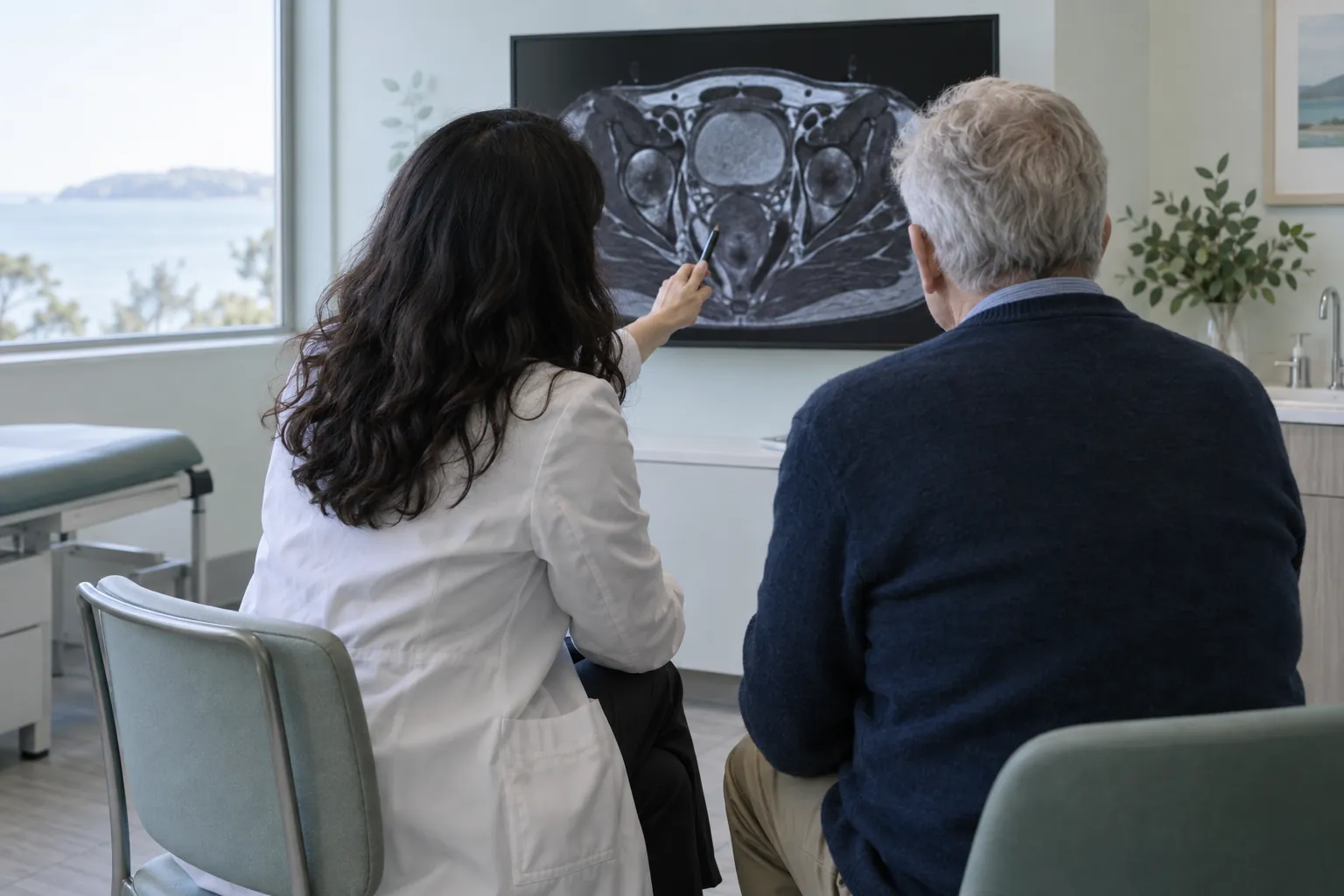
A high PSA is a reason to look more closely, not a diagnosis. What else can raise PSA, and how a repeat test, an MRI and a targeted biopsy fit together.
Kidney masses are often found by accident. How a cyst differs from a solid mass, what extra imaging may be needed, and when to watch, ablate or operate.

Blood in the urine often comes and goes, even when the cause needs treatment. What can cause it, what the CT and cystoscopy work-up involves, and when to go to the ER.

No one procedure suits every man. How prostate size and shape, anesthesia, catheter time, recovery and ejaculation shape the choice, with a side-by-side comparison.
The office where you are already a patient, or the one closest to you. Long Beach is (562) 595-5977, Koreatown is (213) 423-7979, Beverly Grove is (310) 278-8330 and Santa Monica is (310) 582-7137. You can also request a visit online.
That depends on your insurance plan. HMO plans usually need one; many PPO plans and Original Medicare do not. The office can check for you before you book.
Yes, conversationally. She sees patients at the Koreatown office, 2727 W Olympic Blvd, on the 2nd and 4th Wednesday of the month.
Yes. Bring your pathology report and your imaging, and Dr. Su will review them with you and go through your options.
See your primary care doctor for a pre-operative check-up within 30 days of surgery and at least 2 days before it, so the paperwork arrives in time. The full checklist is on the before-your-surgery page.
Tell us where you’d like to be seen and what’s going on. The office you choose will call you to schedule.
Prefer email? care@jsurology.com
In an emergency, call 911 or go to the nearest emergency room.